
01
Pranjal Agarwal↗Work↗Maruti Suzuki EV HMI
HMI Case Study · 2040 Concept · Figma

FUTUREEV HMI

Designing a smarter, calmer and more intuitive driving experience for a 2040 Maruti Suzuki electric SUV, built around the realities of Indian roads.

Role

UX / HMI / GUI Designer

Focus

Research · HMI Strategy · GUI

Tools

Figma · XD · Illustrator · After Effects

Type

Automotive · Future Concept

01 , Brief & Challenge

What if a car behaved like a calm digital co pilot?
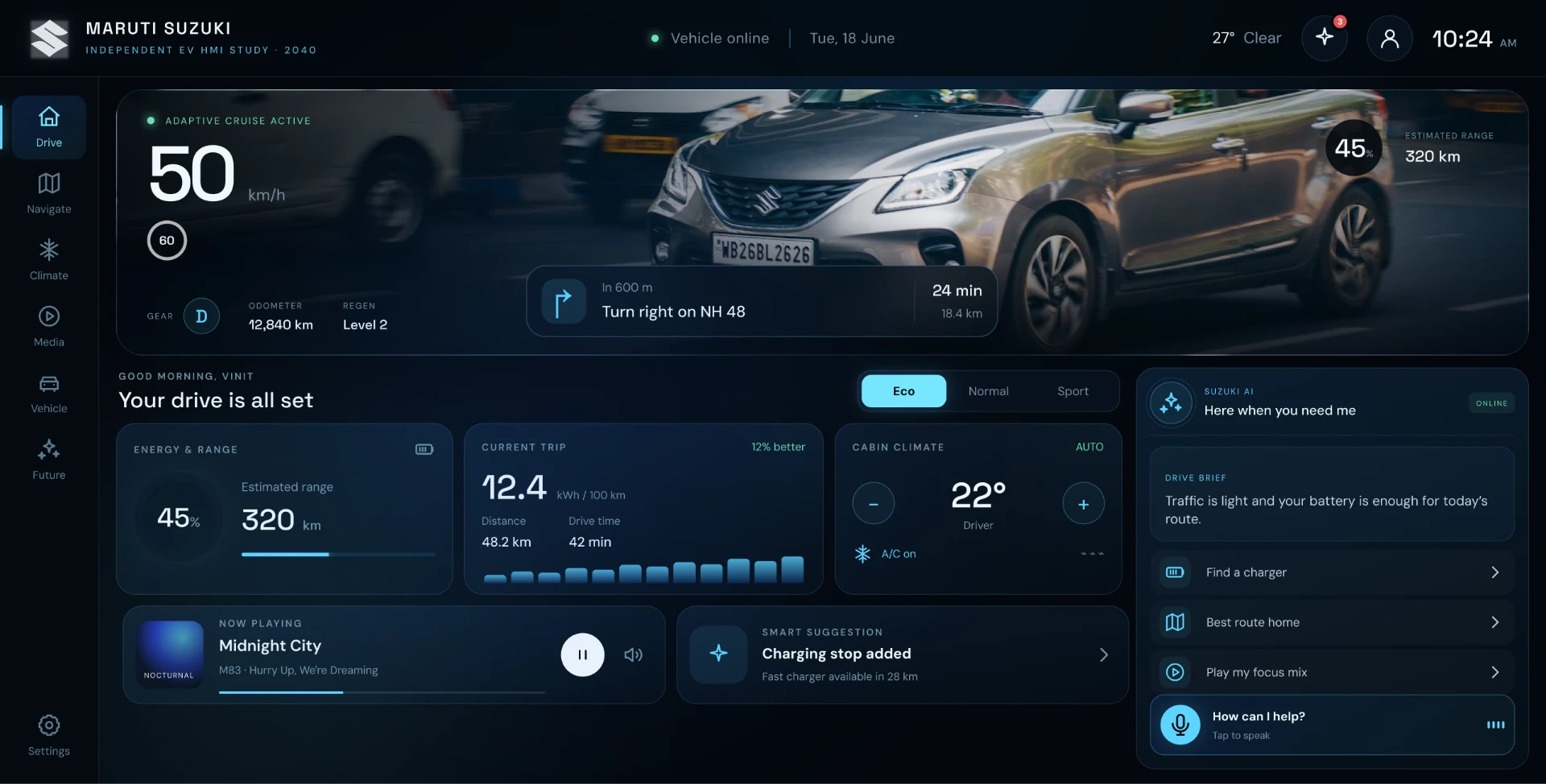
Maruti Suzuki EV HMI primary drive dashboard
Primary drive dashboard: speed, adaptive cruise, energy, climate and AI suggestions in one calm view.

The brief: a futuristic but user friendly HMI for a 2040 electric SUV that is sustainable, accessible, safe and entertaining, while staying relevant to Indian driving conditions.

Navigation, energy, AI assistance, safety, media and vehicle controls had to live together without overwhelming the driver. The core question: how might we make advanced technology simple enough to use while driving?

01
Technology complexity

Charging, range and connected features can intimidate users with lower tech familiarity.

02
Indian roads

Dense traffic, unpredictable conditions and patchy connectivity demand a contextual interface.

03
Energy anxiety

How far can I go? Where can I charge? Range is an experience problem, not a number.

04
Diverse users

Different levels of digital confidence, languages, habits and interaction preferences.

02 , Research & Insights

Comfortable with digital, not with complexity.

EV familiarityTouchscreen comfortReal time infoCongestionSafety alertsVoice & AIAccessibilitySustainability
01
Effortless, not just digital

Users already accept digital HMI. The job is to make it effortless.

02
Visible, not distracting

Traffic, hazards, pedestrians and charging surface contextually instead of being searched for.

03
Energy supports decisions

Battery, range, route, consumption and charging designed as one connected flow.

04
Beyond touch

Physical controls, voice and gestures opened the door to a multimodal HMI.

05
Different depths of info

Urban, Tier 2 and less urban drivers need different levels of detail, so the system adapts.

How might we make driving an EV in India easier, more sustainable and intuitive?How might we enable drivers to make energy wise choices at the right moment?
03 , Personas & Principles
Portrait · Priya,

Priya, 35

Practical eco conscious driver · Tier 2 city

"I care about the planet, not about learning a spaceship."

Moderate techFamily safetyLow cognitive load

Need: Clear battery and range, simple navigation, charging visibility.

Portrait · Rohan,

Rohan, 28

Technology first driver

"If it's smart, it should feel smart, and fast."

High techAI assistanceVoice

Need: Intelligent navigation, personalisation, premium infotainment.

Design implication

Not two systems. One adaptive system that becomes simpler or more advanced depending on context and preference.

Calm

Technology never visually overwhelms.

Glanceable

Primary info understood in a moment.

Contextual

The right info at the right time.

Adaptive

Responds to driver, vehicle and road.

Connected

Energy, nav, media and AI as one ecosystem.

04 , Visual Language

Futuristic mobility, premium minimalism.

#0A1118

Deep Navy

#05070A

Night Black

#3B82F6

Electric Blue

#22D3EE

Energy Cyan

#E6F1F7

Glass Light

Translucent dark panels, subtle gradients and luminous accents evoke night driving and EV energy. Geometric type keeps every reading glanceable at speed.

05 , The HMI Ecosystem

One system, every moment of the drive.
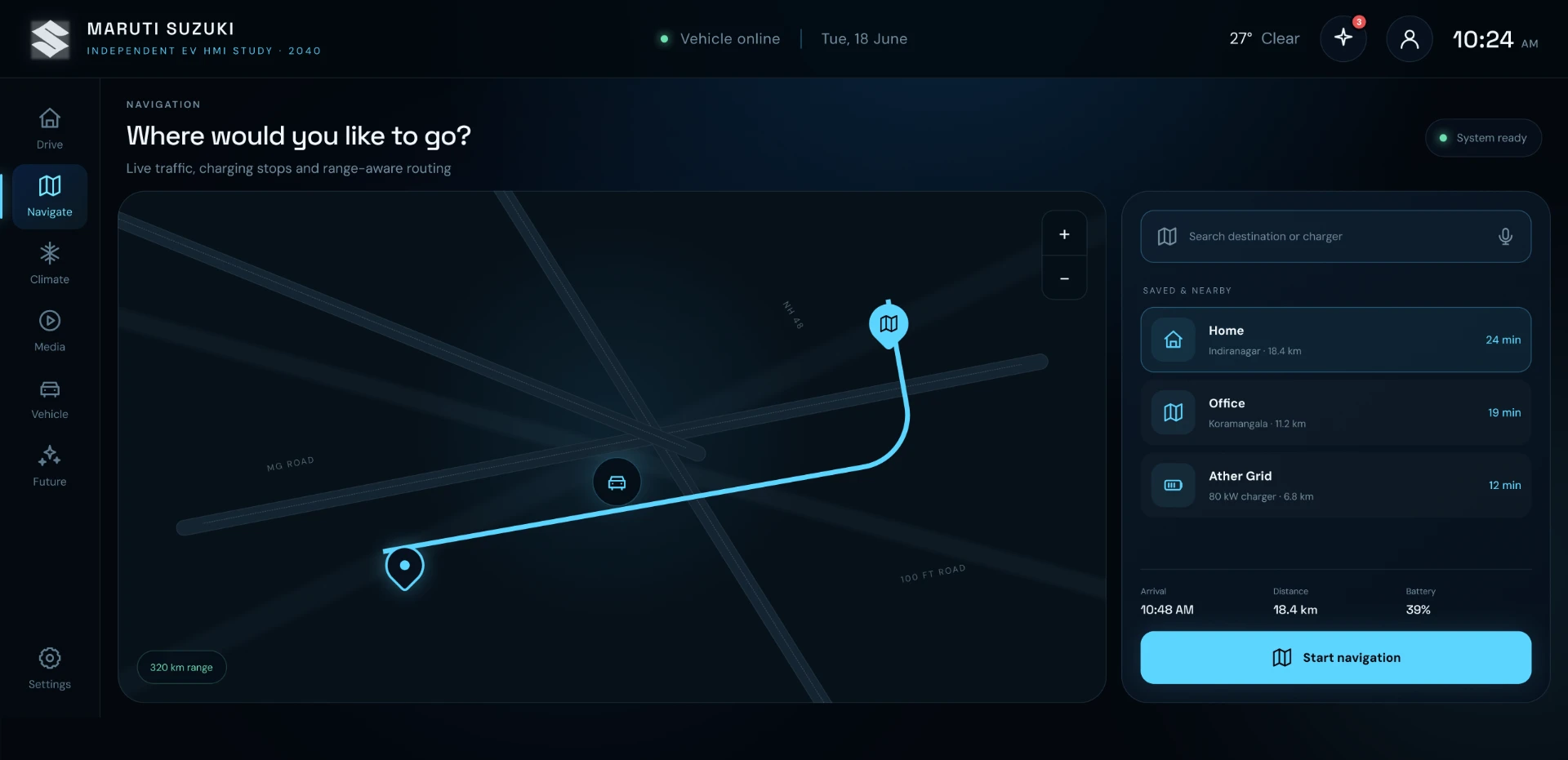
Range aware navigation with charging stops
Range aware navigation plans charging stops into the route.
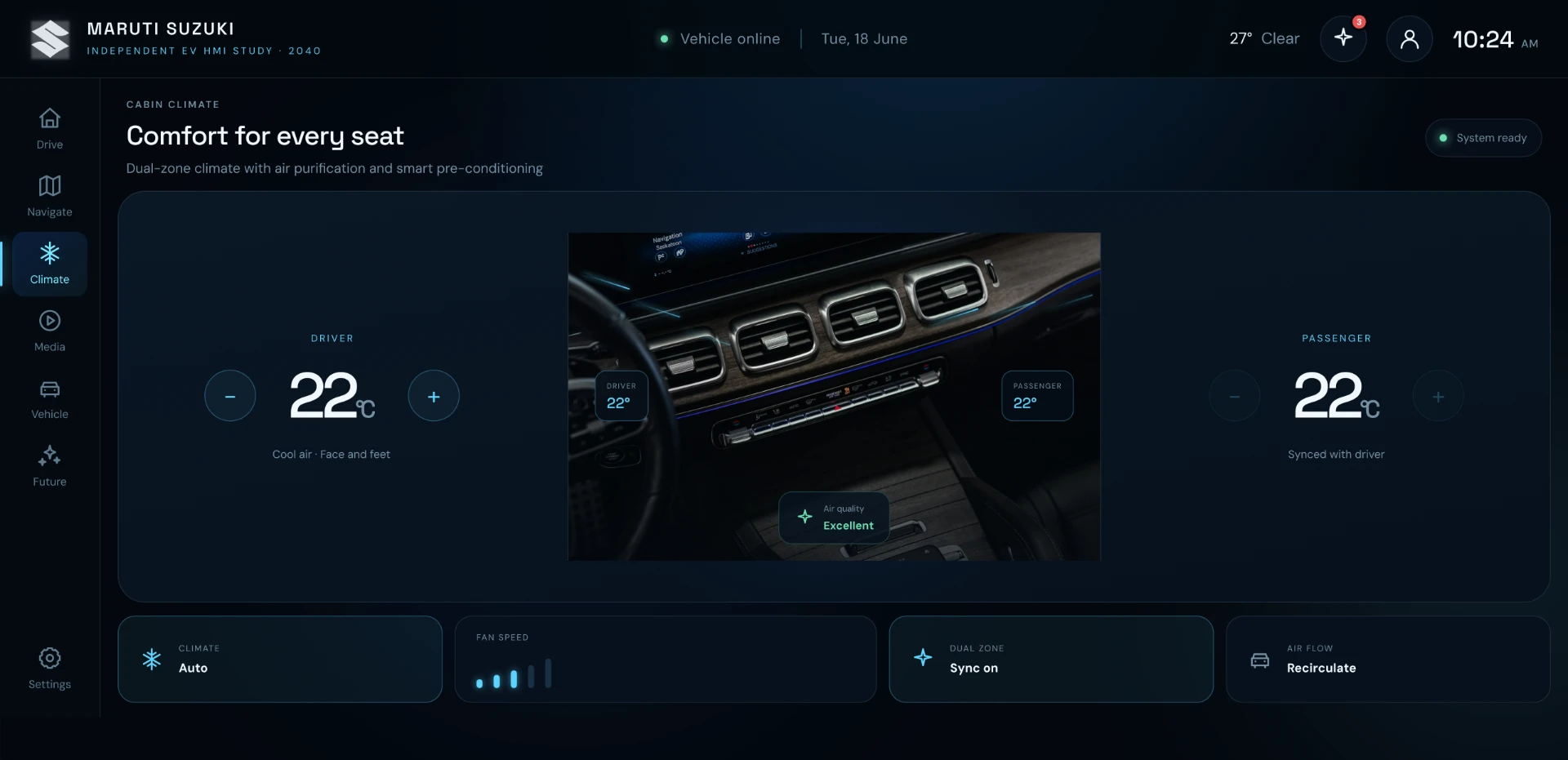
Dual zone climate and air purification
Dual zone climate and cabin air purification.
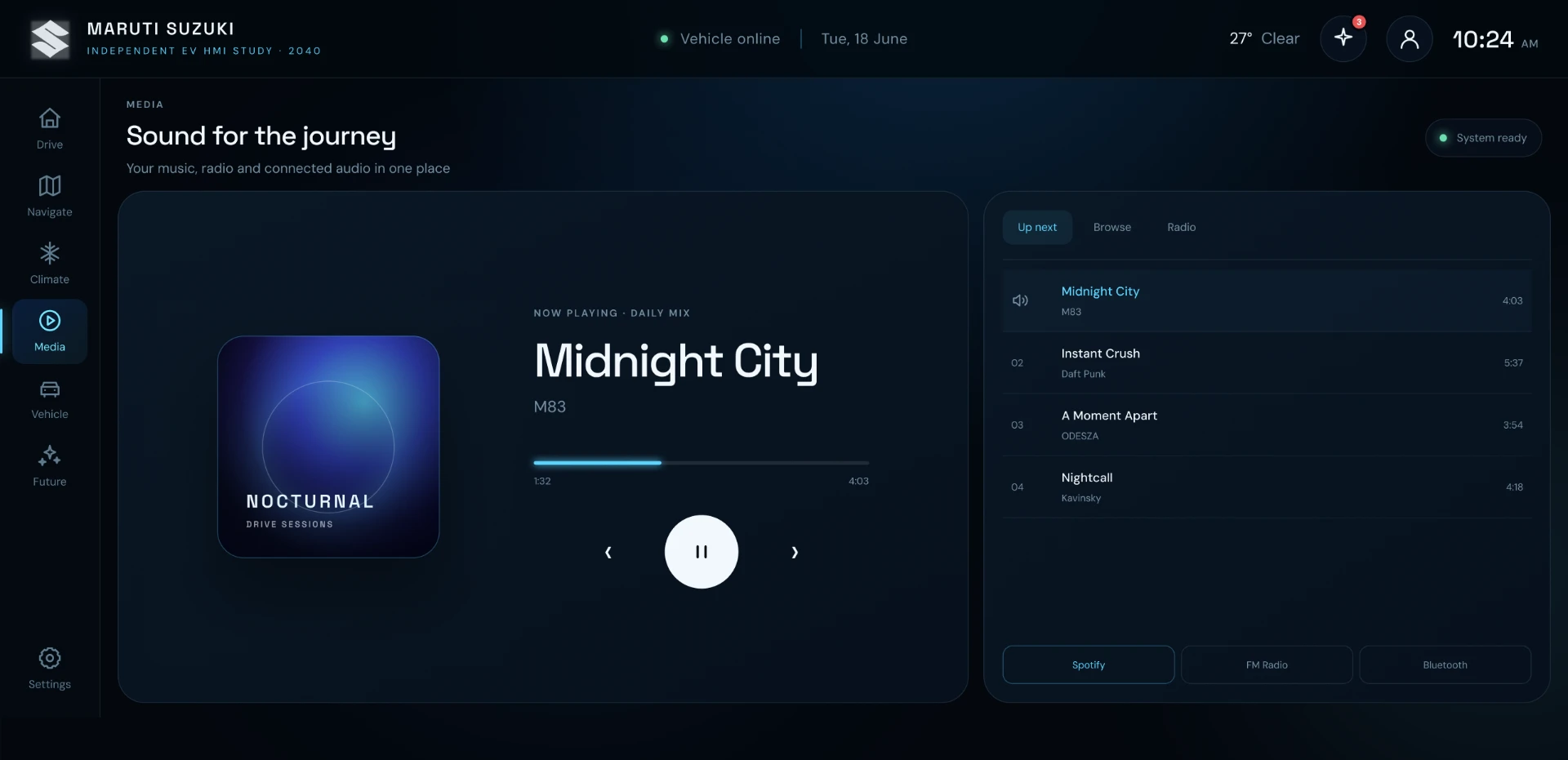
Media and connected audio
Media, radio and connected audio.
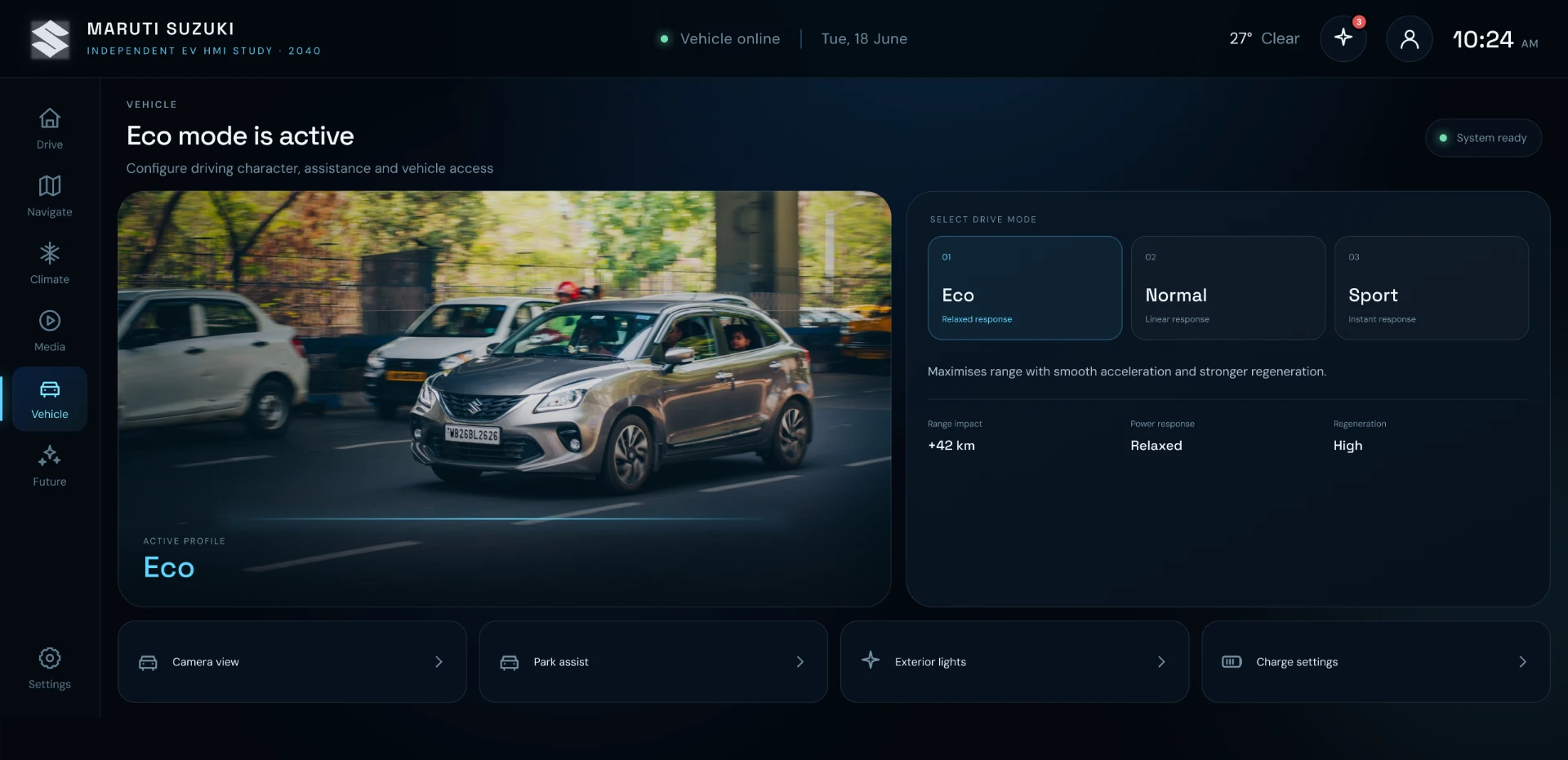
Vehicle settings and drive modes
Drive modes: Eco, Normal and Sport.
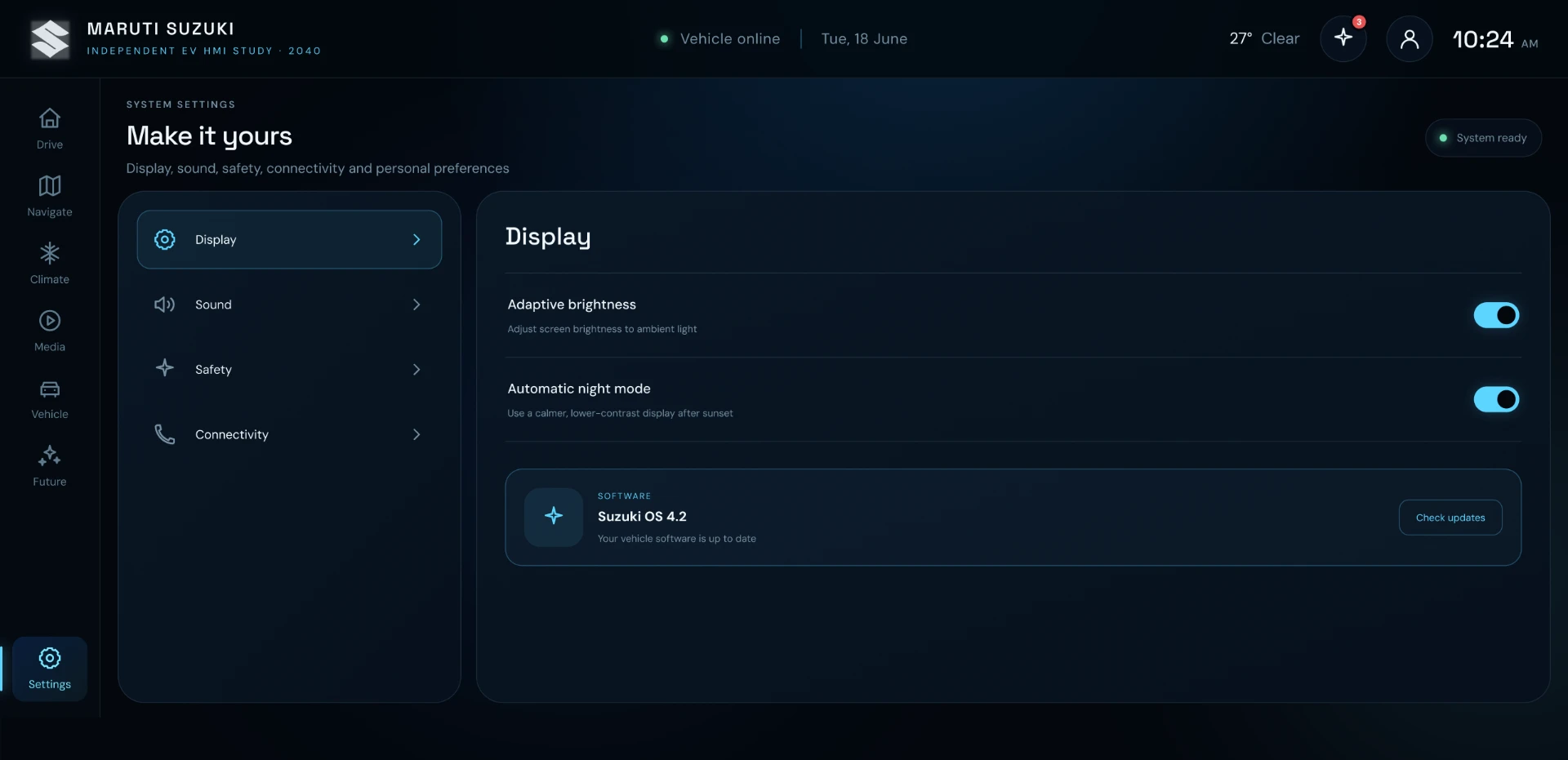
System settings and personalisation
Personalisation: make it yours.
06 , 2040 Innovation Layer

Where the car starts to understand you.
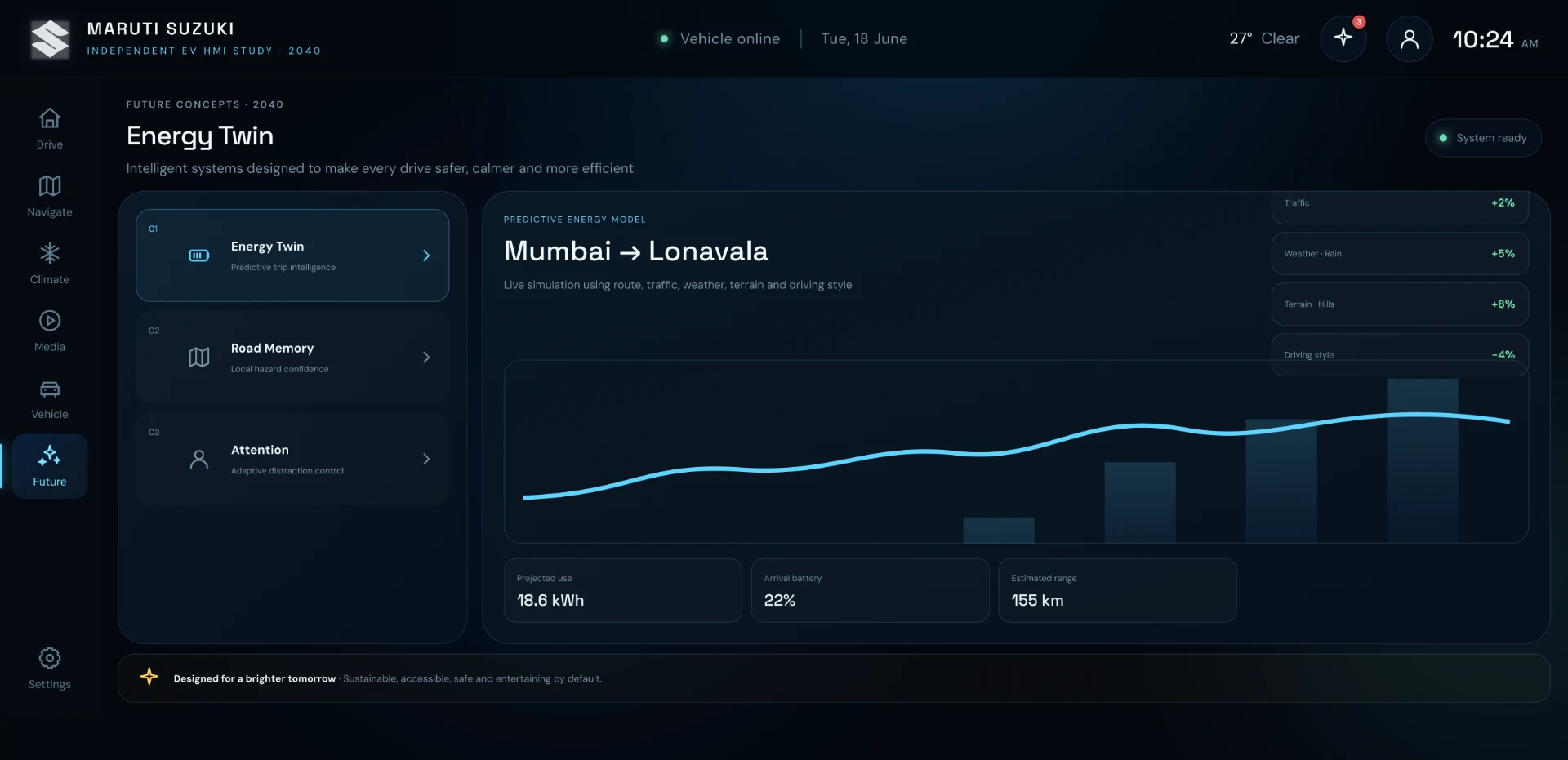
Predictive energy twin, road memory and attention mode
Future concepts: Personal Energy Twin simulating Mumbai to Lonavala, Road Memory and Attention Mode.
Personal Energy Twin

Simulates a route before you drive it and predicts consumption and charging.

Road Memory

Learns local hazards like potholes and speed breakers and warns ahead.

Haptic Guidance

Directional cues through the seat and wheel so eyes stay on the road.

Attention Mode

Reduces the interface to essentials when the road demands focus.

07 , Reflection

From a static cluster to an adaptive co pilot.

Less is safer

The hardest design decisions were about what to hide, not what to add.

Energy as experience

Turning range into decisions reduced anxiety more than any bigger number could.

"The best car interface is the one you barely notice while driving."

Outcome

  • Concept project: 7 high fidelity HMI screens delivered.
  • [ADD REAL RESULT]

Need something similar?

This project is part of my ux design work.

Explore UX Design services
Next Case Study →New Public CollegeWebsite UX, on page SEO, and every word of the content, live client work.